Subscribe to Science@Culture now

Awarding-winning journalist and author Mary Mulvihill has been keeping us up to date for years on all sorts of news and events relating to Science and/or Culture. She has just launched a new blog so it is now even easier to keep up with the latest developments.

This month Science@Culture has links to, among others:
A BBC Radio4 documentary on the science and history of the placebo effect, and;
A public lecture in Dublin this Wednesday on why so many in America deny Global Warming.

Visit her blog here and be sure to subscribe.

Hiking in Scotland

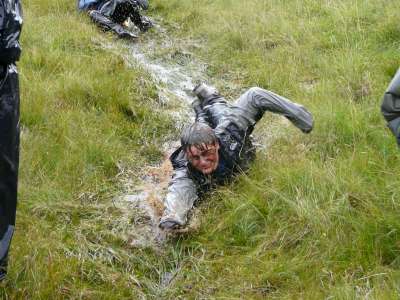
My colleague Mark Campion organised a hiking trip to Scotland for the last few days of the holidays for 15 students plus 5 teachers.

Stunning scenery and great walks for four days. Torrential downpours on day 5.

Day 5 was the best.

Click on the flick icon on the right (scroll down to find it) to see more pics.

We had a ball.

Bring on another year.

The Periodic Table of Videos

Tables charting the chemical elements have been around since the 19th century – but this modern version has a short video about each one.

In the short time since launching this site, our videos have been watched more than 1.8 million times.

But we’re not finished yet. We’ve started updating all the videos with new stories, better samples and bigger experiments.

So once you’ve watched all 118 videos, make sure you come back and check on our progress. We still have a few surprises up our sleeves!

The video above is a short introduction. Find out more at periodicvideos.com

Excellent resource; thanks Ewan.

Texas School district to let teachers carry guns; it’s just common sense

A Texas school is to allow vetted teachers to carry handguns into school for the first time starting next term.

District superintendent David Thweatt:

We have a lock-down situation, we have cameras, but the question we had to answer is, ‘What if somebody gets in? What are we going to do?” he said. “It’s just common sense.

It certainly adds a new dimension to homework policy and lesson plans.

Reuters article

Almost half of the world’s primate species are in danger of extinction

Mankind’s closest relatives – the world’s monkeys, apes and other primates – are disappearing from the face of the Earth, with some being literally eaten to extinction.

Source: IUCN, the International Union for Conservation of Nature (see article here)

And we’re supposed to be the intelligent ones.

Engines ready for another year

The bumph from the school arrived today containing school calender, results, agenda for staff-meeting etc, but all I wanted to see was whether or not I was teaching second years next year. Up until now we taught science on a rota system at Junior Cert level. All the students in the year are split into groups and taught Biology by the specialist Biology teacher, Chemistry by the specialist Chemistry teacher, etc. They rotate after a set amout of class periods to that each term they get to do one complete cycle.

The system sounds good in theory in that the specialist teacher will have a greater enthusiasm and knowledge for each topic than a general teacher. And for the teacher it means much less preparation time, both for theory and experiment. It certainly made my life easier for my first few years.

More recently we have begun to notice disadvantages, and like the little Dutch boy with his finger in the dyke (can’t see that phrase lasting much longer in our pc world), once we began to question the system it quickly became apparent to all that it was actually failing the students.

Firstly there was no ownership for teachers over indivdual students, so none of us were particularly concerned with a given student’s progress, or got to know their strengths as well as we should have.

Secondly, a lot of time was lost in adminstration during each rotation; results which should have been transferred from one teacher to another often got lost or simply forgotten about.

If the number of periods allocated to each group varied (due to teacher illness or other unforeseen breaks) then one group advanced more than another. This always caused problems when setting a common exam paper at the end of term.

So this year for the first time I get a class to myself at second-year level and will presumable get to hang on to them next year. Which means I get time to try out some of the ideas I have been reading about over the last few years:

  • Class Blogs. I hope to be taking advice from Tom Kendall who has helped his school set up class blogs for different subjects in Loreto Navan.
  • eTwinning. It would be nice to do a class science project in conjunction with a similar class from another country. It means I finally get to use the forms Conor Galvin gave me a couple of years ago.
  • Scifest. After going on about it ad nauseum last year we actually had just one team enter. But they won in three different categories (congratulations again Georgina and Philippa!), so hopefully we can use that to promote the competition further this year. I would hope to use these projects as their entry for their Junior Cert projects the following year.
  • Mindmaps. This is a wonderful tool which is I would guess is very much underused. there are lots of different programs out there so choosing one will be part of the research.
  • YouTube. I have yet to upload a video for Junior Cert Science, so knowing that non-Physics specialists will be teaching Physics in the school will hopefully give me a focus to develop this over the year ahead.
  • Sensors. Developing Investigative learning with the use of data-logging sensors (student led, as opposed to me demonstrating).

Bottom line:
I don’t know how much of this I can incorporate but if by the end of the year I have spoken less and listened more than would otherwise be the case I will consider it a success.

The mystery of magnetism

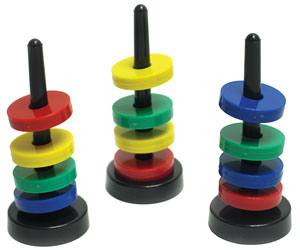
Floating rings used to demonstrate magnetic repulsion

Sometimes the most basic question can be the hardest to answer. “How do magnets work?” is one such question. If you’re a teacher like me you’ll probably end up using fancy terms like “North and South Poles” and “Opposite Poles Attract”, and may even go on to demonstrate it using the floating magnets above.

Or if it’s a senior class you might talk about the material having “Magnetic Domains” which are usually randomly oriently but in a magnet are all lined up parallel.
And this invaribly works.
But there’s usually one student (quite often it’s someone who is not great academically, and consequently may remain in the background for much of the time) who’s not happy with this. 
But how does one magnet know that the other magnet is there?

And that, my friends, is a great moment. It means that at least one person in my class managed to avoid all the ‘education’ that I stuff down their throats, and maintained his ability to think for himself. ‘Course that won’t help him (or her) much when it comes to exam time, but at least in my mind it counts for a lot.

A former student once sent me a card on which he wrote “Thanks sir, I was in your class for two years and in that time I learnt nothing”. It was one of the nicer compliments I have received. Cheers Luke.

I hope to be teaching more Junior Cert Science this year and need to remember to avoid the temptation of throwing in jargon as a substitute for deeper explanations. For that matter, when the apple falls from the tree how does it ‘know’ which way is down?

Or here’s one for leaving cert students: why is the charge of a proton (which is composed of three quarks) the same as the charge of an electron if they are completely seperate particles?

Here’s a lovely article taken from the  science magazine Discover detailing how the author realises that nobody actually understands how magnetism works.

As teachers, we need to become comfortable discussing the limitations of what we know. 

Science, evolution and creationism (again)

I have written before about creationism and science education, and how it is not mentioned in Junior Cert Science. Every so often these surveys appear in the papers; this one was in the New Scientist last May. Researchers polled a random sample of nearly 2000 high-school science teachers across the US in 2007:

[ ] asked about the teachers’ personal beliefs . . . 16% of the total said they believed human beings had been created by God within the last 10,000 years.

I guess the number shouldn’t be surprising, but I can’t help but feel a little uncomfortable.

Fun with magnets

I have a couple of old CRT televisions at the back of the lab, and bring them out to show what happens when you put a rare-earth magnet in front of them. However I obviously lack the imagination to come up with a show like this. I’ll be more adventurous next time; turn off the lights, turn on the trippy music, burn a few incense candles . . .

Course if I really needed to get the troops interested in Magnetism all I would need is a frog and a very strong magnet.