A body continues to maintain its state of rest or of uniform motion unless acted on by an unbalanced external force.
Thanks to Mr Mont’s physic blog for the heads up on this one.
One more for the Youtube files.
A body continues to maintain its state of rest or of uniform motion unless acted on by an unbalanced external force.
Thanks to Mr Mont’s physic blog for the heads up on this one.
One more for the Youtube files.
At the end of last term we spent a class trying to recreate some slo-mo pictures of bursting water-balloons. Chris brought in his super-duper camera and Mr Devitt let us borrow his stage lights, so after 10 takes and 100 photos we managed to get two nice photos:


Not quite as good as the professionals, but not bad for a first attempt. The following youtube clip is fantastic for explaining the twin concepts of mass and inertia:
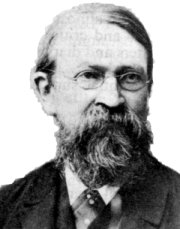
1859 marks not only the 150th birthday of the publication of Darwin’s On the Origin of Species, but also a somewhat less well-known occasion; It was the year Ernst Mach published the first of his 500 publications (his last was published five years after his death, in 1921).
Most will know of this man through his association with the speed of planes; Mach Number is the speed at which an object is moving divided by the speed of sound.
But Mach has offered much more to the world of Science; he lived in a time when Philosophy and Science went hand and hand, and he made many contributions not just in these areas, but also in Psychology and Educational Theory. He wrote a number of text-books for school science, but was very critical of the tendency of cramming as much as possible into the syllabus.
This quote sums up so much of what is wrong with our schooling:
I know nothing more terrible than the poor creatures who have learned too much . . . What they have acquired is a spider’s web of thoughts too weak to furnish sure supports, but complicated enough to produce confusion.
Mach was also an advocate of what are known as ‘thought experiments’, these later became famous through Albert Einstein and his idea of sitting on top of a light beam. Indeed Einstein went on to give credit to Mach for his ‘philosophical writings’. It’s probably no coincidence that Einstein’s views on education were not that dissimilar to Mach’s:
One had to cram all this stuff into one’s mind for the examinations, whether one liked it or not. This coercion had such a deterring effect on me that, after I had passed the final examination, I found the consideration of any scientific problems distasteful to me for an entire year.
Of course this was all over one hundred years ago. Obviously it’s all changed since then.
It would appear that we have some explaining to do.
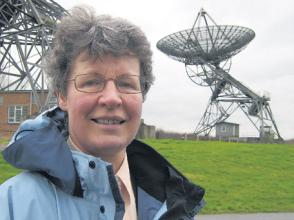
I don’t imagine many people picked up on it, but it was a little embarrassing to hear both of the presenters mis-pronounce the name of one of Ireland’s most famous scientists at the presentation of the Young Scientist awards last Saturday.
Jocelyn Bell Burnell made one of the most important discoveries in Cosmology EVER in 1967 when she discovered the first pulsar (pulsating radio star).
Imagine a star which has the mass of the Sun, but only the size of the Earth, which rotates not once in 24 hours like our Earth, but ONCE EVERY SECOND. That’s what Bell Burnell discovered.
Since then pulsars have been discovered which rotate almost ONE THOUSAND TIMES EVERY SECOND!
Controversy followed when her supervisor (Antony Hewish) and Martin Ryle were awarded the Nobel Prize in 1974 but she wasn’t. I can’t ever recall her making an issue of it, although other prominent astronomers at the time did (notably Fred Hoyle).
Hewish himself must have been getting fairly fed-up being asked about this.
“You know, in the popular mind, she is the key person in the discovery of pulsars,” he says. “I’m totally fed up with it this stupid business that Jocelyn did all the work and I got all the credit, I get fed up with that comment because it’s just blarney, I mean it’s just totally wrong.
“If she’s disgruntled about the Nobel, well that’s too bad quite honestly. It’s a bit like an analogy I make – who discovered America? Was it Columbus or was it the lookout? Her contribution was very useful, but it wasn’t creative. And I don’t think you do get the Nobel prize for that”.
Photo and quote taken from The Belfast Telegraph
Jocelyn Bell Burnell (Dame Jocelyn Bell Burnell to give her her full title – she was awarded a DBE (Order of the British Empire) in 2007) has done much to promote girls doing Science, and Physics in particular (she is also president of The Institute of Physics).
So it was a little embarrassing that first Aoibhinn Ni Shuilleabhain (herself a physics graduate) and then straight after Ray D’arcy referred to her as Dame Jocelyn Bell Burnett.
Perhaps it was their cue cards.
This was left by the photocopier recently and I thought it was pretty cool;
Truth
Sticks and stones may break my bones,
But words can also hurt me.
Stones and sticks break only skin,
While words are ghosts that haunt me.
Slant and curved the word swords fall
To pierce and stick inside me.
Bats and bricks may ache through bones,
But words can mortify me.
Pain from words has left its scar,
On mind and heart that’s tender.
Cuts and bruises now have healed;
It’s words that I remember.
By Barrie Wade
We are all deeply conscious today that the enthusiasm of our forbearers for the marvellous achievements of Newtonian mechanics led them to make generalisations in this area of predictability which, indeed, we have generally tended to believe before 1960, but which we now recognise were false. We collectively wish to apologise for having misled the general educated public by spreading ideas about the determinism of systems satisfying Newton’s laws of motion that, after 1960, were to be proved incorrect.
An extract from a paper entitled The recently recognised failure of predictability in Newtonian Dynamics
Proceedings of the Royal Society of London, Series A, Vol 407, No. 1832
This is taken from a paper written by the late Sir James Lighthill, who at the time was President of the International Union of Theoritical and Applied Mechanics, and who incidentally also held the position of Lucansian Professor of Mathematics in Cambridge, a position which was first filled by Isaac Newton himself (Stephen Hawking is currently holding the post). The reference to Newtonian mechanics is significant here because it was in this area more than any other that the notion of absolute truth was (is?) most often associated.
The idea that Physics (built on mathematical rules) is the most fundamental knowledge that exists, and all other knowledge is built on this, can be traced back to the writings of the the positivist Auguste Compte.
Compte coined the term sociology; he saw it as giving meaning to all the other sciences – holding them all together as it were.
This is nicely caricatured in the cartoon below.
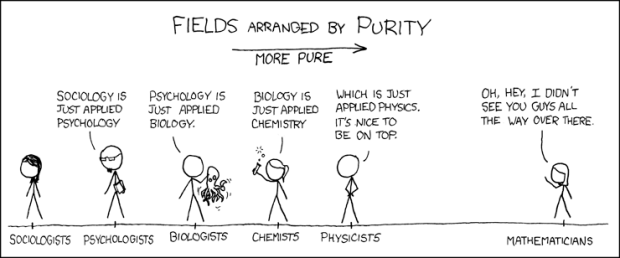
Compte didn’t actually consider Mathematics to be a science; it was merely a tool used by scientists!
Here’s a rather more profound clip from Jacob Bronowski’s Ascent of Man. At 2:00
We have to cure ourselves of the itch for absolute knowledge and power.
Thanks to my friend Prof Kirk Junker for pointing out the paper to me.
Imagine the horror in staff-rooms across the country if principals were to announce that they would be walking into teachers’ classes every day at random times?
I know my teaching would improve.
Picking out the greatest disservice we do to out students as science-teachers is no easy task; there is quite an impressive list to pick from. Not reflecting or even being aware of this is in itself significant. I think C.S. Pierce put it best when he wrote “Find a scientific man who proposes to get along without any metaphysics [philosophy] . . . and you have found one whose doctrines are thoroughly vitiated by the crude and uncriticised metaphyiscs with which they are packed.”
This year marks the 200th birthday of the birth of Charles Darwin and the 150th birthday of the publication of his famous book On the Origin of Species, so it seems like a good opportunity to address at least one of these issues here, namely the concept of absolute certainty in Science.
Science does not offer absolute proof; it never has and it never will. Science (and scientists, and science teachers) are their own worst enemy here, because for hundreds of years we have been (tacitly or otherwise) giving the impression that Science does offer – and can find – certainty.
A second related contributory factor is the word ‘Theory’. It has two completely different meanings, depending on whether it is being used in a scientific context or in general parlance. So where, in a student’s school science education, do we as teachers address this?
There’s a nice example of this in Richard Dawkins The Root of all Evil; See this in action at 8 minutes 30 seconds into the clip below.
The key here is at the very end.
Interviewee: You say “this is truth, because it’s based on evidence. That’s such a fuddy answer.”
Dawkins: We don’t say that, we say “we’re struggling towards the truth, and as new evidence comes in we refine it”.
Can’t recall ever saying that in my lessons, or indeed ever having heard it from a science teacher either.
Maybe the problem lies with us.
How many of us for that matter would be able to distinguish between the following:
Law
Principle
Dogma
Theory
Axiom
Hypothesis
Equation
Doctrine
Effect
Conjecture
(and for two marks can you put a scientist’s name to each one?)

There are a lot of excellent educational blogs out there, and most are well worth reading if one only had the time.
But one thing bugs me; we tend to focus on what worked for us in class (and sometimes even what didn’t work), and so an outsider reading all these blogs would come away with the impression that teaching is wonderful.
All the time.
And that’s not true. And I know it’s not just me. And I know when things go very wrong we as teachers often don’t have anywhere to go.
Let me give an example. This week has been hectic; I have four teams entering Young Scientist (a science-fair competition) and they are at various stages of readiness. Some are constantly bugging me about it, while others I have to chase down to make sure they are doing anything at all.
It’s the last week of term and students are in festive mode in class, while I, while not wishing to dampen their spirits, am adamant that there is still work to be done.
As a houseperson with responsibility for 60 students I have to deal with each and every disciplinary issue as they arise, and boy have they been arising this week.
I have been socialising at night-time, consuming more alcohol than I otherwise might during the rest of term.
Bottom line:
I’m frazzled (read ‘grumpy’). So you can guess what happens next. I’m teaching my normal class. Mary is chatting at the back while I am talking at the front. I snap at Mary. Mary snaps back. I give Mary detention. Mary feels (quite rightly) that she has been treated harshly and the whole class atmosphere changes.
I am human. I experience the full gamut of human emotions. I make mistakes. As a teacher I have to make 100 calls a day on discipline. Most involve ignoring somebody talking or simply asking them to be quite. Most of the time I get these calls right. Occasionally I get them wrong. As I become more experienced I get better at making these calls. But sometimes I have a day where I get more wrong than right. And that’s life.
The trick is to recognise this and acknowledge it. And if that means apologising to a student, whether it be straight away, or at the end of class, or even the following day, then so be it.
Why should an apology be such a big deal for me as a teacher?
And why, if class discipline is such a big issue in schools, are so few of us writing about it?
To access the Junior Cert Revision document, simply right-lick on the link below and then choose ‘Save Target As’ to save it to your computer
Revision is one of those areas where I suspect some of us fall down.
Particulary at Christmas time, I tend to forget that while the top students seem to have no problem knowing what to learn and how to plan their revision, us lesser mortals could do with a bit of guidance.
While there are plenty of students who won’t open a book over Christmas (and good luck to you), for those who are trying hard, you could probably do with a little guidance. Hopefully this will help.
Don’t forget to ask your teachers NICELY to help you put together a list of tasks which will help with your revision.
And say THANK YOU to Ms Marion Mcginn for coming up with the template.
Remember that you can always edit this to suit your own needs.
Good luck!
 Think for Yourself