Wonderful online science game – who knew learning could be fun?
Bring the class down to the computer lab and have them play in teams of mixed ability. Millionaires get no homework.
But watch out – it’s a little addictive.
I have been experiencing a renaissance in my teaching life ever since I decided to embrace my ignorance on all issues biological (still can’t learn to love Chemistry unfortunately, but there may still be time).
We did heart dissections the other day.
I spent an evening searching for related videos on youtube. I am a firm advocate of the notion that unless you have been ‘prepped’ in terms of what to look for,you may well end up looking at an amorphous mess. In other words both the student and the teacher can be looking at the same object and see two completely different things. Discovery Learning obviously has its place, but as a teacher it’s all about knowing when to mix and match.
As usual there was a lot of sifting to be done before ending up with final list. As always, this is a labour of love.
Along the way I picked up the following nuggets:
Each day your body makes 200 billion new blood cells.
White blood cells live for two weeks, Red blood cells live four months.
You have about 5 litres of blood in your body; when you donate blood you are giving up about half a litre.
Your heart pumps about 70 times a minute, which equates to over 100,000 times a day!
When exercising your heart-rate doubles to about 140 times a minute.
Your heart is about the size of an apple.
Blood takes about 35 seconds to make a round trip when relaxed, or 15 seconds when exercising.
Heart Disease is Ireland’s number one cause of death.
Irish women have almost twice the rate of death from heart disease as the EU average.
The difference between a Heart Attack and a Stroke:
Both are a result of blocked arteries: In a heart attack the blocked arteries are feeding the heart muscles, and those muscles are not getting the oxygen and nutrients they need to function.
With a stroke, the blocked arteries are in the brain, and those brain cells are not getting what they need to function… depending on where in the brain it occurs, different functions are affected (e.g., speech, writing ability, and so on…)
A third place where blocked arteries occur is in the lungs… then it is called a pulmonary embolism.
Ms Salter gave me a crash course on the dissection itself the day before, so I knew just about enough to set the troops on their way. They had an absolute ball, so why is this not a mandatory activity? Why should non-specialist teachers like me get away with not doing such a memorable activity with my students?
I have since been informed that we can get hold of hearts which have all the tubes coming out of them, which should be much more educational.
I did tape the students doing the dissection itself, but accidentally taped over it. Sorry!
If doing it again I would tell the students that their task is to teach another group about what they have learned. It tends to focus the mind!
The Large Hardon Collider is due to be turned on this day next week (Wednesday, 10th of September), so it’s not a bad time to put together some useful resources to show to the troops to give them some idea of what it’s all about.
At just under 5 minutes, the Large Hadron Rap isn’t a bad place to start:
The ‘rappers’ mention dark energy and dark matter; comprising 96% of the universe between them, they can’t be directly measured, but their influence is immense. Find out more by watching Patricia Burchat speak at TED:
Want more? Try ‘Most of the Universe is Missing‘
Mary Mulvihill over at Science@Culture reminds us that BBCRadio 4 is devoting the entire day to the event. Watch Dara O’Briain, among others, give his rather unique take on the event. Not a big fan of homeopathy or Deepak Chopra is our Dara. He does appear to be a fan of Physics though; ‘wonder how he got on with Science in school? He strikes me as someone I’d have to keep on when it came to handing out chemicals!
Just got back from wonderful New Zealand yesterday and came across some of these impressive deals.
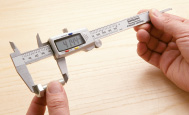
Digital calipers from aldi for €10, available from Sunday 13th (checkout blowtorch available also for €10). Why would anyone use the old-fashioned vernier calipers when you these cut out all the confusion. Ideal for ‘measuring the resistivity of wire’ experiment.
Dynamo torches from lidl for €10, available from Monday 14th. Use them at Junior Cert as an examle of energy conversions, and at Leaving Cert for demonstrating Electromagnetic Induction. I haven’t bought one yet but hopefully they can be taken apart to see the internal workings.
VHS to DVD converter for €168 from Maplin (Maplin doesn’t have an Irish website for some reason, but they do issue newsletters with their special deals). If, like me, you have a bank of VHS cassettes with numerous programs on each cassette, then is the ideal way to start afresh. This time around I use one DVD per program, and use an elecrtronic labeller (which I also got from lidl) to label each DVD. Our science department got one of these a couple of years ago but I reckon it was probably twice the price.
Maplin also currently have Infrared Thermometers for €33 and multimeters for €8 (I would check that ‘crocodile leads’ fit into these sockets before buying).
I was thrilled to see that Maplin have started stocking educational products from mutr. So many so-called ‘Science Toys’ that you see in toyshops look fantastic but are actually crap. Mutr (middlesex university teaching ressources) on the other hand are the business; I’m not even sure they do it for profit, certainly many of their products are unique and very reasonably priced.
Get your Christmas shopping done early this year
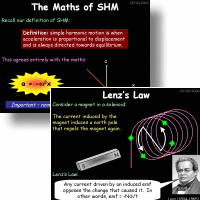
I don’t tend to use Power-Point much. ‘Not sure why; guess I can never stay still long enough to give a formal-type lesson. I did however use Education Using PowerPoint a few years back and was very impressed. It’s a very extensive set of resources, put together and managed by Will Richards. A complete set (including resources for Junior Cert) will set you back £50 sterling (€75?). And naturally, having been designed for the British GCSE and A level system, may have to be adapted somewhat.
Still, if Power Point is your thing, this does seem like a useful resource.
If you do end up purchasing, please get in touch and let me know what you think.